
Guide
Hare coursing: what to do, and who to call
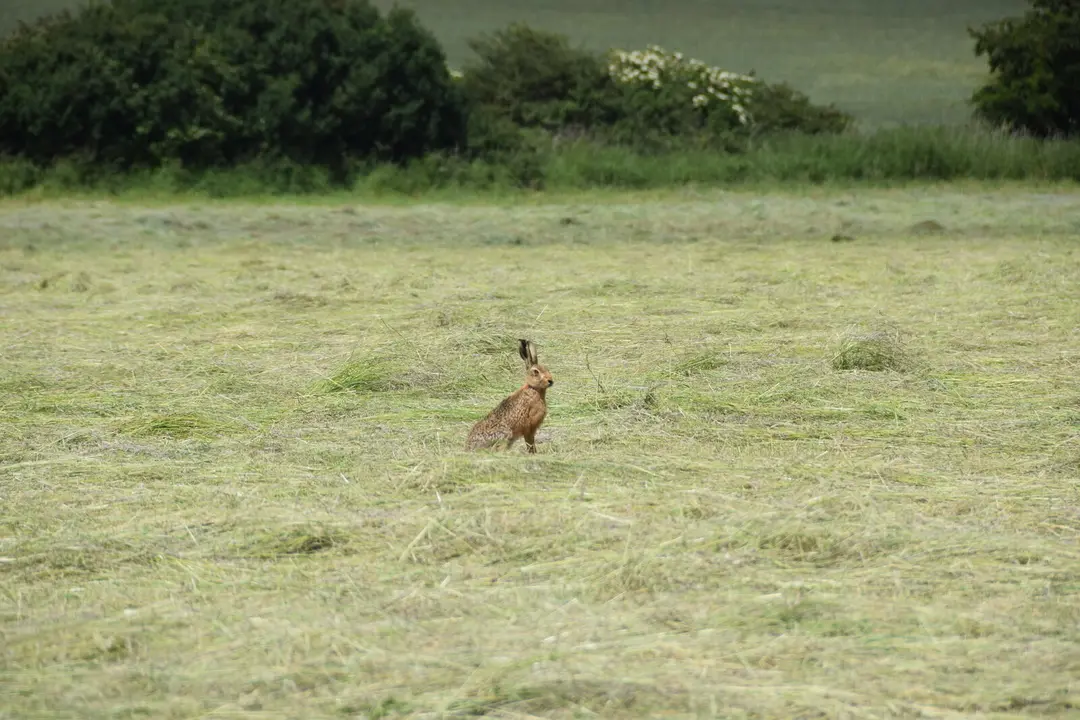
If you live or farm in rural Uttlesford, you may have seen it: dogs set on hares across open fields. Hare coursing is a crime. It harms wildlife, damages farmland, crops, gates and fences, costs farmers and landowners money, and spreads fear in rural areas. When the Sentencing Council, which sets guidelines for the courts, published a new guideline in May for offences associated with hare coursing, one of its members, a judge, said these crimes cause “real harm — to wildlife, to property, to farmers and their families”.
The season traditionally starts in September, after harvest, when fields are left bare, so it is under way now. Here’s what the police advise, and what they are doing about it.
What to do
- If you see hare coursing happening now: ring 999 immediately. Essex Police’s Rural Engagement Team asks callers to “provide as much information as you can – for example, a What3Words location, a description of the people involved, vehicle registration numbers, vehicle descriptions and the location and direction of travel”.
- Stay safe: “don’t put yourself at risk and don’t approach anyone”. The Rural Engagement Team says “it is very important that you don’t confront hare coursers”.
- Afterwards: when the police give you a reference number, they ask you to share it, with the day’s date, in any local WhatsApp groups you’re in, so that anyone else with information can ring them and they can link it to the same incident.
- If it isn’t an emergency: report it online on Essex Police’s website (where there is also Live Chat) or ring 101. You can also tell Crimestoppers anonymously, online or on 0800 555 111.
- If you have a hearing or speech impairment: use the textphone service on 18000, or text 999 if you’ve registered in advance with the emergencySMS service.
- If you farm or own land: the police suggest “blocking entrances, locking gates or digging ditches” to keep hare coursers out.
- If you find a stray or abandoned dog: tell Uttlesford District Council on 01799 510510 or at [email protected]. Its collection service runs in office hours; outside them, it asks you to keep the dog and contact it the next working day, and not to let it run loose again. If the dog is injured or distressed, the council says to report it to the RSPCA, online or on 0300 1234 999.
Correct on 26 October 2026.
Why it matters here
In April, Essex Police said there had been a rise in hare coursing and related crime across the Uttlesford district during 2025, after a long-term fall in reported incidents since 2018. It said the rise reflected a national one, and was largely linked to the hot, dry summer and early harvest, which “left fields flat and bare for longer”. Across Essex, rural crime overall had fallen over the year to May, but there had been “a marked rise in incidents of hare coursing”, the force said then.
In July, Superintendent Darren Deex of Essex Police said “Lindsell and the surrounding area has experienced a disproportionate level of hare coursing activity over the past 18 months”.
The dogs
Hare coursing is cruel to the dogs as well as the hares. When tougher penalties came in, in 2022, the RSPCA’s head of wildlife, Adam Grogan, said its rescue teams had seen “many dogs, used for coursing, coming into our care having been injured during the sport or abandoned when their owners no longer have use for them”.
Since May, Essex Police has said it will seize “all dogs found” when it responds to hare coursing. The police can keep what they seize “for use as evidence at a trial”, so a dog can be held until any case is over.
If its owner is convicted under the Hunting Act, the court can order the dog to be forfeited, so that the owner loses it for good. The court can say what should happen to the dog next. If it doesn’t, the police decide.
Since 2022, courts have also been able to disqualify anyone convicted of an offence connected with hare coursing from owning or keeping a dog, and to make them pay “all the expenses incurred by reason of the dog’s seizure and detention”. The Sentencing Council’s guideline treats “distress, injury and loss of life to animals” as harm of the most serious kind.
Essex Police doesn’t publish what happens to the dogs it seizes in hare coursing cases, so I’ve asked (under the Freedom of Information Act).
What the police are doing
The police response has stepped up over the past year.
In April, Essex Police said Uttlesford’s neighbourhood officers now had a mobile camera that reads number plates, paid for by the Uttlesford Community Safety Partnership. It lets officers on patrol check for stolen or uninsured vehicles, which the force says are “often used by hare coursers”. The force’s Rural Engagement Team also uses trail cameras in isolated places, bought with money seized from criminals.
In May, Essex Police’s then Chief Constable, Ben-Julian Harrington, met farmers and the National Farmers’ Union (NFU), and announced measures to improve the force’s response. They included:
- treating an emergency call reporting hare coursing taking place “in the same way as if someone were to report a robbery in progress”;
- more training for response and neighbourhood teams in Braintree and Uttlesford;
- a 4x4 off-road vehicle available “at peak times for hare coursing”, more drones available, and requests for support from the National Police Air Service;
- seizing “all dogs found when we respond to hare coursing incidents”;
- targeted operations “at the start of the traditional hare coursing season in September”;
- a new Rural Independent Advisory Group, to raise issues and hold the force to account on its response.
By mid-May, the force said, it had seized seven vehicles since August 2025, issued five Community Protection Warnings and seven Community Protection Notices, and “dealt with” 12 people, and it acknowledged that “more needs to be done”. A Community Protection Warning is a written warning to stop behaviour that harms a community’s quality of life. If the behaviour goes on, a Community Protection Notice can follow, and breaking a notice is a criminal offence.
By July, off-road capability in Uttlesford had been improved with the addition of two 4x4s. Essex Police also works with neighbouring forces and partners through Operation Galileo to share information, patrol, target offenders and seize the vehicles and dogs they use.
The advisory group first met on 30 September. Its 14 members come from rural backgrounds, including farmers, landowners and the NFU, and are independent of the police. It will meet every three months. Essex Police says it is thought to be the first group of its kind in the country to focus on crimes that particularly affect farmers and rural communities, such as theft of farm vehicles and machinery, hare coursing and poaching, livestock worrying, offences targeting stables and large-scale fly-tipping.
That’s welcome. Reports from the public matter too: “Information from the public is vital,” Superintendent Deex said in July, because police use it “to identify hotspots, deploy patrols, take action against offenders and target crime prevention work”.
I’ve asked Essex Police, under the Freedom of Information Act, how many hare coursing incidents and crimes were recorded in Uttlesford in each of the three years to March 2026, and what happened to them. I’ll share what they say.
Sources
Essex Police
- Hare coursing: Tell us what you know — news release, 29 April 2026.
- Plans to improve response to hare coursing — news release, 15 May 2026.
- ‘We are making Essex a hostile environment for hare coursers’ — news release, 14 July 2026.
- New Essex Police Rural Independent Advisory Group gives farmers and rural communities a stronger voice in policing — news release, 5 October 2026.
- What you can do about wildlife crime — advice page, checked 26 October 2026.
- Report a crime — online reporting page, checked 26 October 2026.
Police, Fire and Crime Commissioner for Essex
- Calls repeated to dial 999 if hare coursing is seen taking place in Essex — news release, 10 January 2025.
Department for Environment, Food & Rural Affairs and Home Office
- New legislation to crack down on illegal hare coursing now in force — news release, 1 August 2022.
Uttlesford District Council
- Stray dogs — advice page, checked 26 October 2026.
Sentencing Council
- Sentencing Council publishes new guideline for sentencing hare coursing offences — press release, 14 May 2026.
Acts of Parliament
- Police and Criminal Evidence Act 1984, section 22 — retention of things the police seize, as in force on 26 October 2026.
- Hunting Act 2004, section 9 — forfeiture, as in force on 26 October 2026.
- Police, Crime, Sentencing and Courts Act 2022, section 65 — recovery orders, as in force on 26 October 2026.
Home Office
- Anti-social behaviour powers: statutory guidance for frontline professionals — statutory guidance, revised October 2026.